
Oil of Oregano for Immunity and Gut Health: What Studies Show
Understand the difference between laboratory findings and personal outcomes, plus practical questions to ask before using a concentrated botanical product.

Research needs context
Studies of oregano compounds may use laboratory models, foods, or carefully controlled preparations that do not match a retail bottle. Those results can guide future research, but they do not predict a personal outcome on their own.
Nirast makes Oil of Oregano Softgels. This article was written by Nirast’s editorial team and reports what the published research does and does not show.
See Nirast Oil of Oregano Softgels → · $29.99 a month · 30-Day Money-Back Guarantee
Published by Thang Phi, founder of Nirast and publisher of the Nirast Journal.
The short answer
Research on oregano compounds is mostly laboratory work and carefully controlled preparations, and it does not show that an oregano oil supplement improves immunity or settles gut symptoms in people. Normal immune function depends on adequate nutrition, and ongoing bloating, diarrhea, constipation, pain or bleeding should be checked by a clinician rather than handled with a supplement.
Look for human studies, clear dosing information, and a conclusion that matches the actual product.
A useful evidence check has four parts: who was studied, what preparation was used, what comparison was made, and what outcome was measured. A lab result about a microbe says little about whether swallowing a different preparation changes symptoms or infection risk in people. No broad list of “science-backed benefits” can bridge those gaps.
NIH explains that normal immune function depends on adequate nutrition. Its consumer overview does not establish oregano oil as a way to improve illness outcomes. “Antibacterial” in a laboratory setting and “better immunity” in a person are different claims that need different kinds of evidence.
Gut health is individual
Digestion is influenced by food patterns, sleep, stress, medicines, and many other factors. NIDDK describes several possible contributors to gas and bloating, so one ingredient is unlikely to explain every symptom.
For ongoing bloating, diarrhea, constipation, pain, or bleeding, seek evaluation instead of cycling through supplements.
NIDDK notes that gas and bloating can follow swallowed air or breakdown of carbohydrates, and may also occur with other digestive conditions. The timing of meals, bowel changes, new medicines, and whether symptoms affect daily life are more useful clues to share with a clinician than an unsupported claim about “fixing the gut.”
Ask the label questions
Check the botanical name, serving amount, carrier ingredients, storage directions, and intended route. Use the product only as labeled, and do not substitute an essential-oil preparation for a food or capsule product.
A pharmacist can help review the label alongside your medicines and health history.
If a claim mentions carvacrol or thymol, check whether the finished product reports an amount and whether the cited study used that same preparation. The National Library of Medicine identifies these compounds in oregano oil, but their presence does not establish a clinical outcome for a retail bottle.
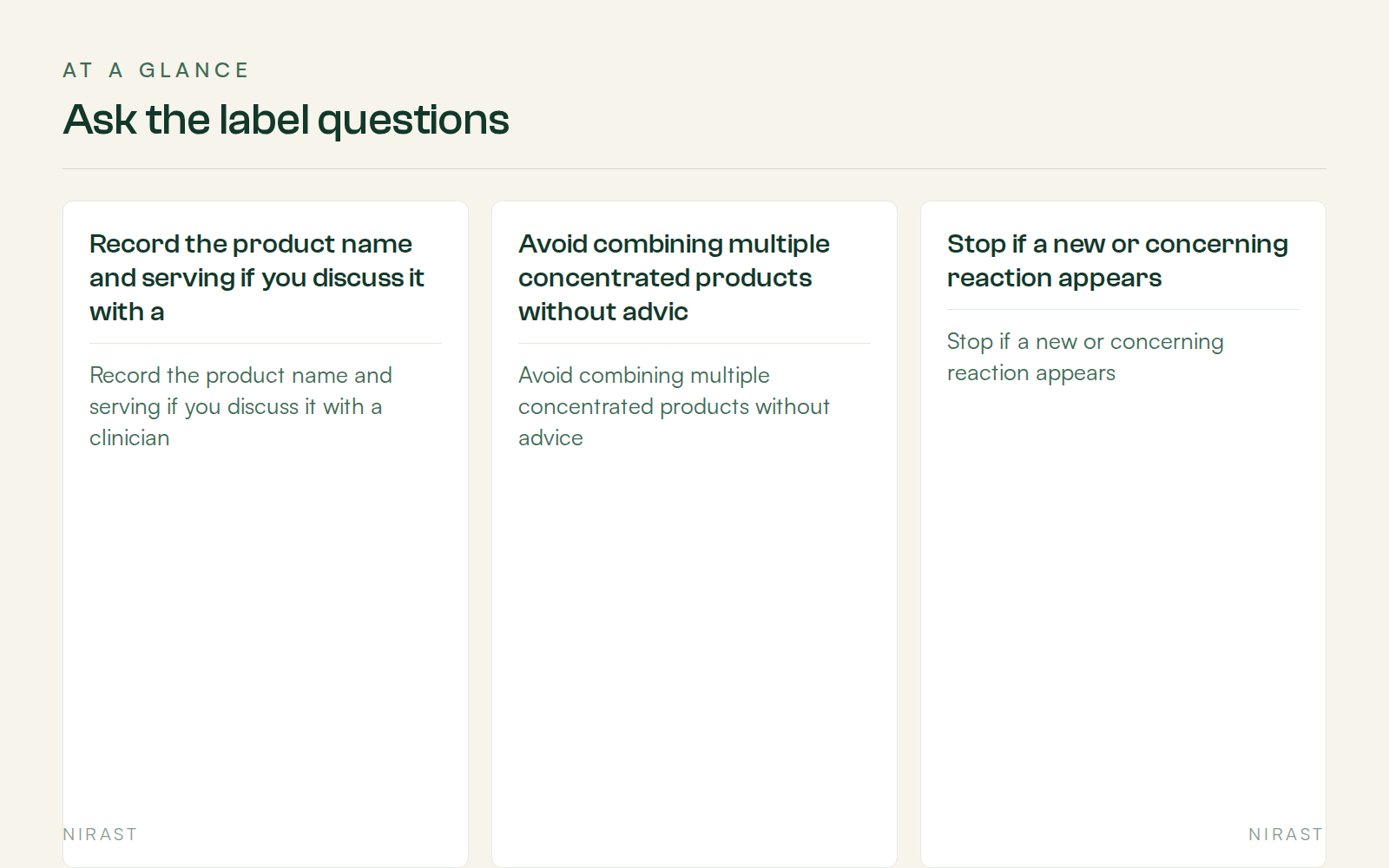
- Record the product name and serving if you discuss it with a clinician.
- Avoid combining multiple concentrated products without advice.
- Stop if a new or concerning reaction appears.
When to get help quickly
Seek urgent care for severe abdominal pain, black or bloody stool, repeated vomiting, fainting, facial swelling, or breathing trouble. These are not situations for self-directed supplement experiments.
If symptoms are mild but continue, arrange a routine appointment and bring a list of products and medicines.
Record the start date, frequency, and any changes in bowel habits. NIDDK advises speaking with a clinician when gas symptoms are bothersome, change suddenly, or occur alongside pain, diarrhea, constipation, or weight loss. A record helps keep the discussion specific without guessing a cause.
The balanced bottom line
Oregano oil is a concentrated botanical with uncertain everyday benefits and potential individual risks. Evidence-aware use means checking the formulation, following its directions, and discussing the decision with a qualified professional.
This article is for general educational purposes only, is not medical advice, and is not intended to diagnose, treat, cure, or prevent any condition.
Sources
- NIDDK: Gas and bloating symptoms and causes
- National Library of Medicine LiverTox: Oregano
- NIH Office of Dietary Supplements: Immune function
These statements have not been evaluated by the Food and Drug Administration. This product is not intended to diagnose, treat, cure, or prevent any disease. Talk to your doctor or pharmacist before starting a supplement, especially if you are pregnant, nursing, take medication or have a medical condition.
Related reading
- Oregano Oil: What It Is, What the Evidence Covers, and How to Choose a Form
- Oil of Oregano: What It Is, What the Evidence Shows, and How to Choose
- Oregano Oil vs Oil of Oregano: Are They the Same Thing?
- Oregano Oil 101: Dosage, Safety, and Evidence Limits
Related product: Oil of Oregano Softgels.