
Oil of Oregano at Home: What to Know Before You Use It
A practical, evidence-aware guide to reading oregano-oil labels, choosing a safe routine, and knowing when professional advice matters.
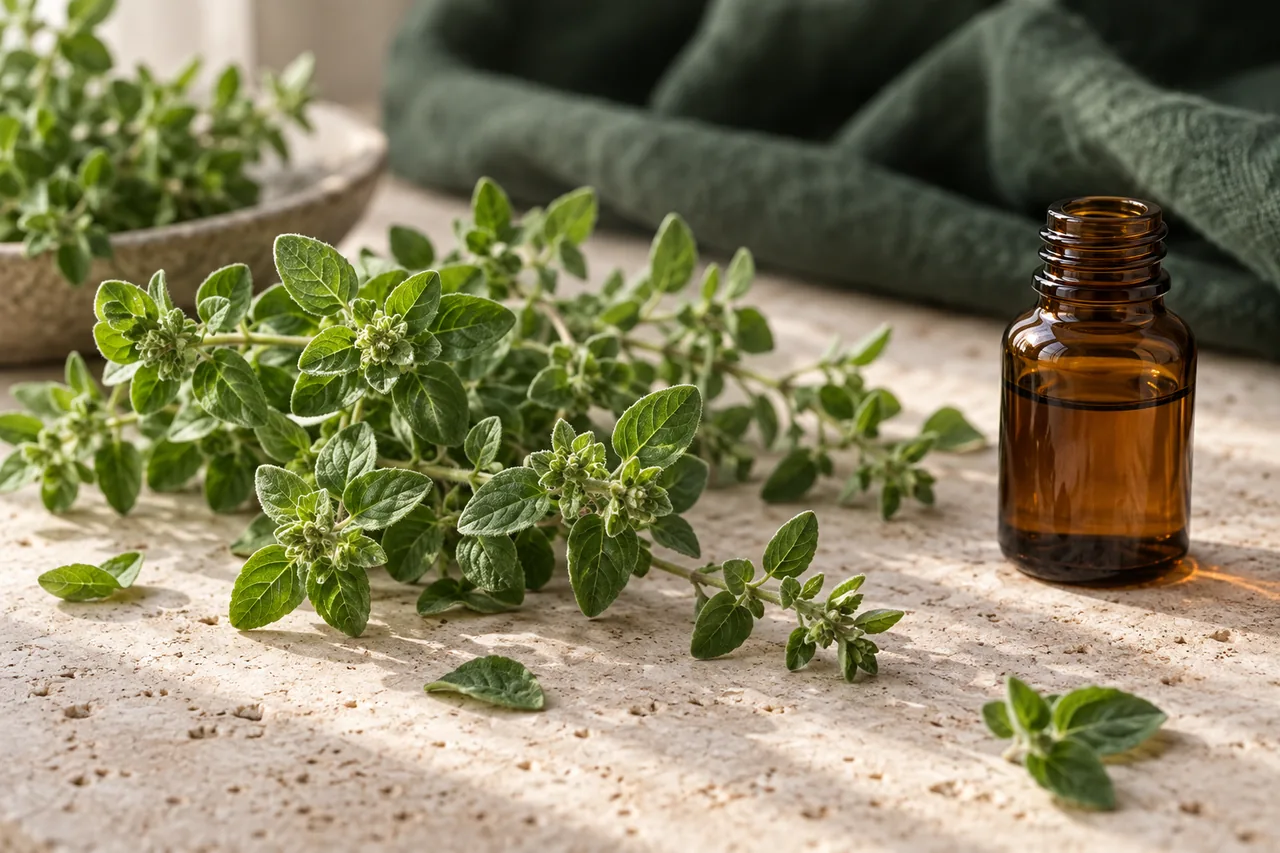
Start with the evidence
Oregano oil is a concentrated botanical preparation, not a general-purpose household remedy. Laboratory findings do not show what an oral product will do for a person, and clinical evidence for everyday wellness uses remains limited.
Nirast makes Oil of Oregano Softgels. This article was written by Nirast’s editorial team and reports what the published research does and does not show.
See Nirast Oil of Oregano Softgels → · $29.99 a month · 30-Day Money-Back Guarantee
Published by Thang Phi, founder of Nirast and publisher of the Nirast Journal.
Consider online benefit lists as prompts for questions, not as medical conclusions. A product label should identify ingredients, serving size, and directions clearly.
The National Library of Medicine describes carvacrol and thymol as components of oregano oil, but the presence of a familiar compound is not proof that a particular bottle has a meaningful effect in people. Ask whether a claim comes from a human study of a comparable oral product, or only from a dish or animal model.
Read the label closely
Compare the botanical name, plant part, amount per serving, carrier oil, and suggested use. Essential oils are highly concentrated and are not interchangeable with culinary dried oregano.
Use only the route and amount stated on the label. Do not improvise a larger serving, mix it into another supplement, or use an oil intended for aromatherapy by mouth.
A dropper, softgel, and diluted culinary oil cannot be compared by counting drops or capsules. Check whether the label states the amount of oregano oil per serving and the other ingredients. If that information is unclear, there is no sound basis for copying a dose from another brand.
- Check the serving size and ingredient list.
- Keep the bottle closed and away from children.
- Ask a pharmacist about interactions with medicines.
Who should pause first
Pregnancy, breastfeeding, childhood use, allergies, chronic conditions, and prescription medicines all change the safety conversation. A clinician or pharmacist can review the exact product and your personal context.
Stop using a product and seek advice if you notice rash, swelling, breathing trouble, persistent stomach upset, or another unexpected reaction.
For a useful medicines review, bring the full ingredient list, your usual medicines and supplements, and the serving you plan to take. The FDA warns that supplement ingredients can interact with medicines and affect care around a procedure; a generic “natural” label does not answer that question.
Keep household wellness simple
Reliable basics still matter: hand hygiene, regular sleep, varied foods, movement that fits your ability, and recommended routine care. A supplement should not replace those habits or an evaluation for new symptoms.
For urgent symptoms such as trouble breathing, fainting, severe pain, or sudden confusion, contact emergency services rather than waiting for a supplement to help.
If your goal is relief from a specific symptom, name the symptom and how long it has been present before buying a bottle. That gives a clinician a clearer starting point than an undefined goal such as “immune support,” and it helps avoid putting off an assessment.
A sensible takeaway
Oregano oil may be a personal wellness choice for some adults, but its role depends on the formulation, dose, and individual health history. Review the label, discuss uncertainty with a professional, and use it only as directed.
This article is for general educational purposes only, is not medical advice, and is not intended to diagnose, treat, cure, or prevent any condition.
Sources
- FDA: Health product safety information
- FDA: Mixing medications and dietary supplements
- National Library of Medicine LiverTox: Oregano
These statements have not been evaluated by the Food and Drug Administration. This product is not intended to diagnose, treat, cure, or prevent any disease. Talk to your doctor or pharmacist before starting a supplement, especially if you are pregnant, nursing, take medication or have a medical condition.
Related reading
- Oregano Oil: What It Is, What the Evidence Covers, and How to Choose a Form
- Oil of Oregano: What It Is, What the Evidence Shows, and How to Choose
- Oregano Oil vs Oil of Oregano: Are They the Same Thing?
- Oregano Oil 101: Dosage, Safety, and Evidence Limits
Related product: Oil of Oregano Softgels.