
Black Seed Oil Benefits for Women: What the Evidence Shows
Black seed oil’s benefits for women are specific and modest: studies in women report raised estradiol and vaginal maturity index scores after menopause, fewer PMS symptoms, better PCOS markers, and lower blood pressure in postmenopausal women with hypertension. It is not a treatment for any of these, and trials have not tested hair or skin claims.
Nirast makes Ethiopian Black Seed Oil. This article was written by Nirast’s editorial team and reports what the published research does and does not show.
See Nirast Ethiopian Black Seed Oil → · $29.99 a month · 30-Day Money-Back Guarantee
Published by Thang Phi, founder of Nirast and publisher of the Nirast Journal.
That picture comes from a small but real set of women-specific studies on Nigella sativa — the botanical behind “black seed” — plus pooled metabolic data that included women. Below is what each study measured, how large the effects were, where the evidence stops, and how to read a label before spending money on any black seed product.
What the evidence covers for women specifically
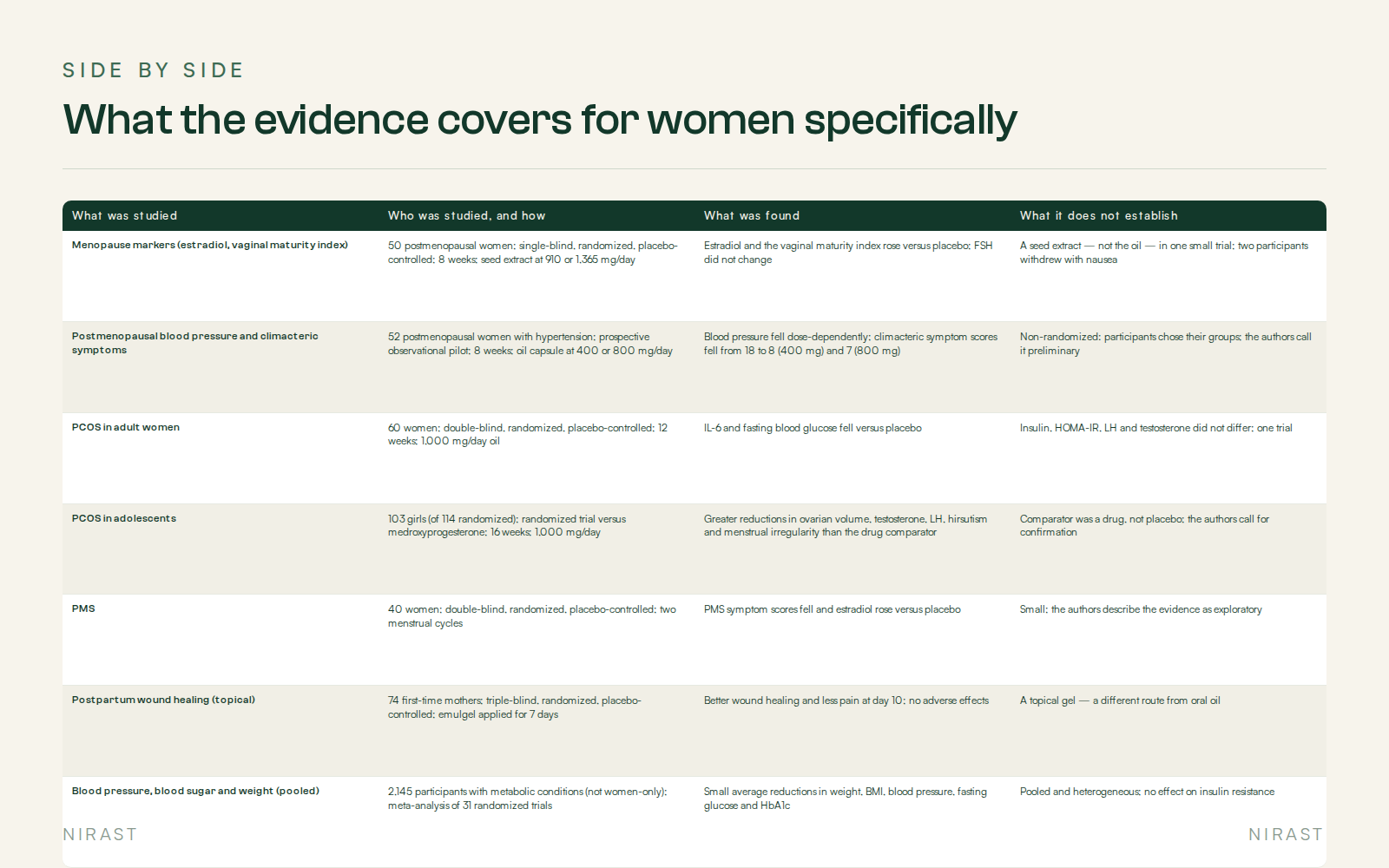
| What was studied | Who was studied, and how | What was found | What it does not establish |
|---|---|---|---|
| Menopause markers (estradiol, vaginal maturity index) | 50 postmenopausal women; single-blind, randomized, placebo-controlled; 8 weeks; seed extract at 910 or 1,365 mg/day | Estradiol and the vaginal maturity index rose versus placebo; FSH did not change | A seed extract — not the oil — in one small trial; two participants withdrew with nausea |
| Postmenopausal blood pressure and climacteric symptoms | 52 postmenopausal women with hypertension; prospective observational pilot; 8 weeks; oil capsule at 400 or 800 mg/day | Blood pressure fell dose-dependently; climacteric symptom scores fell from 18 to 8 (400 mg) and 7 (800 mg) | Non-randomized: participants chose their groups; the authors call it preliminary |
| PCOS in adult women | 60 women; double-blind, randomized, placebo-controlled; 12 weeks; 1,000 mg/day oil | IL-6 and fasting blood glucose fell versus placebo | Insulin, HOMA-IR, LH and testosterone did not differ; one trial |
| PCOS in adolescents | 103 girls (of 114 randomized); randomized trial versus medroxyprogesterone; 16 weeks; 1,000 mg/day | Greater reductions in ovarian volume, testosterone, LH, hirsutism and menstrual irregularity than the drug comparator | Comparator was a drug, not placebo; the authors call for confirmation |
| PMS | 40 women; double-blind, randomized, placebo-controlled; two menstrual cycles | PMS symptom scores fell and estradiol rose versus placebo | Small; the authors describe the evidence as exploratory |
| Postpartum wound healing (topical) | 74 first-time mothers; triple-blind, randomized, placebo-controlled; emulgel applied for 7 days | Better wound healing and less pain at day 10; no adverse effects | A topical gel — a different route from oral oil |
| Blood pressure, blood sugar and weight (pooled) | 2,145 participants with metabolic conditions (not women-only); meta-analysis of 31 randomized trials | Small average reductions in weight, BMI, blood pressure, fasting glucose and HbA1c | Pooled and heterogeneous; no effect on insulin resistance |
The pattern in that table is worth naming: where women-specific trials exist, they test specific outcomes — hormone markers, cycle symptoms, wound healing, metabolic measures — over weeks, at specific doses, against a placebo or a comparator drug. That is a narrower and more useful picture than “supports women’s health”.
Menopause: what the trials measured
The study closest to the “hormones” question is a single-blinded, randomized, placebo-controlled trial in 50 postmenopausal women in Medan, Indonesia. It tested a Nigella sativa seed extract — Shad Nigella Plus, 455 mg of extract per capsule — at 910 mg/day or 1,365 mg/day for eight weeks against placebo (PMID 40352190). Both doses significantly increased estradiol levels (p = 0.01 and p = 0.001) and the vaginal maturity index, a clinical measure of vaginal tissue (p = 0.004 and p = 0.001). FSH — the hormone that rises as ovarian function declines — did not change at either dose. Two participants in the intervention group withdrew because of nausea, and the authors conclude the extract “may offer a safe and effective alternative therapy for managing menopausal symptoms related to estrogen decline.”
A second study asked a different question: blood pressure after menopause. In a prospective observational pilot study, 52 postmenopausal women with high-normal or grade 1 hypertension added a soft gel capsule of black seed oil — NISATOL, 400 mg of oil per capsule — at 400 mg/day or 800 mg/day to their existing antihypertensive therapy for eight weeks (PMID 40338252). Office systolic and diastolic blood pressure fell in a dose-dependent manner (p < 0.01), with the reductions more pronounced at 800 mg/day, and climacteric symptom severity on the Greene Climacteric Scale fell from a baseline average of 18 to 8 at 400 mg/day and 7 at 800 mg/day. The authors call this preliminary evidence — the study was not randomized, and participants chose their groups with their clinicians, which the authors say introduces selection bias. No side effects or adverse reactions were reported during the observation.
PCOS: two populations, two comparators
In adult women with PCOS, a randomized, double-blind, placebo-controlled trial of 60 women found that 1,000 mg/day of black seed oil for 12 weeks significantly lowered IL-6 (an inflammatory marker) and fasting blood glucose versus placebo after baseline adjustment (PMID 42601227). The same trial found no significant between-group differences in fasting insulin, HOMA-IR, QUICKI, luteinizing hormone or total testosterone — so “helps PCOS” is not one uniform effect. The authors frame the oil as a potential adjunct and call for larger, adequately powered trials.
In adolescent girls, a randomized trial compared 16 weeks of Nigella sativa (1,000 mg/day) with medroxyprogesterone (10 mg/day for 10 nights per cycle) — an active drug, not a placebo (PMID 38997723). Of 114 randomized participants, 103 were analyzed; the Nigella sativa group showed significantly greater reductions in hirsutism score, ovarian volume on both sides, serum LH and testosterone, and significantly fewer episodes of oligomenorrhea, menometrorrhagia and amenorrhea. A secondary analysis of the same trial reported fasting plasma glucose falling from 84.52 mg/dL to 76.92 mg/dL over the 16 weeks, while the control group’s average stayed near its baseline (87.26 to 86.73 mg/dL) (PMID 40055705). Both papers call for confirmation in further research — a fair ask, since the comparator was a drug rather than placebo and the population was adolescents.
PMS and postpartum healing: smaller trials, real signals
In PMS, a randomized, double-blind, placebo-controlled trial in 40 women with moderate to severe symptoms found that two months of black seed capsules significantly increased serum estradiol and significantly reduced total mean PMS scores compared with placebo (PMID 41267796). The authors describe the role as “beneficial yet exploratory” and call for more research — the trial was small, single-centre, and its dose reporting is inconsistent between sections.
For postpartum recovery, the evidence is topical rather than oral: a triple-blind randomized controlled trial in 74 first-time mothers found a black seed emulgel applied three times daily for seven days improved episiotomy wound healing (REEDA score mean difference −0.79, p = 0.001) and lowered pain (VAS mean difference −0.74, p = 0.021) at 10 days postpartum compared with a placebo gel (PMID 40465634). No adverse effects were reported, and satisfaction was higher in the black seed group (86.5% vs 56.7%). This is a different route from any capsule or oil you would swallow, and the follow-up was short.
What the pooled data show — and the dose range they sit in
Black seed oil usually arrives as a daily supplement rather than a trial protocol, so the pooled data matter as context. A GRADE-assessed meta-analysis of 31 randomized trials (2,145 participants with metabolic conditions) found small average reductions in weight (−1.59 kg), BMI (−0.51 kg/m²), systolic blood pressure (−3.25 mmHg), diastolic blood pressure (−2.75 mmHg), fasting blood sugar (−18.62 mg/dL) and HbA1c (−0.56 points) — and no effect on waist circumference, hip circumference, waist-to-hip ratio, HOMA-IR or insulin (PMID 41858302). The authors describe the effects as modest and say the high variability across studies means the findings should be interpreted with caution. Those trials were not women-only, and most ran 4–24 weeks.
The dose picture is similarly wide: a separate review of 82 studies (5,026 participants) covered doses from 200 to 4,600 mg/day and interventions from 1 to 48 weeks (PMID 40714301), while a 2025 review reports adults commonly take 1–3 g/day (PMID 40842670). The women-specific studies above used 400–1,365 mg/day. “Black seed oil” is not one protocol, and results belong to the dose and preparation tested.
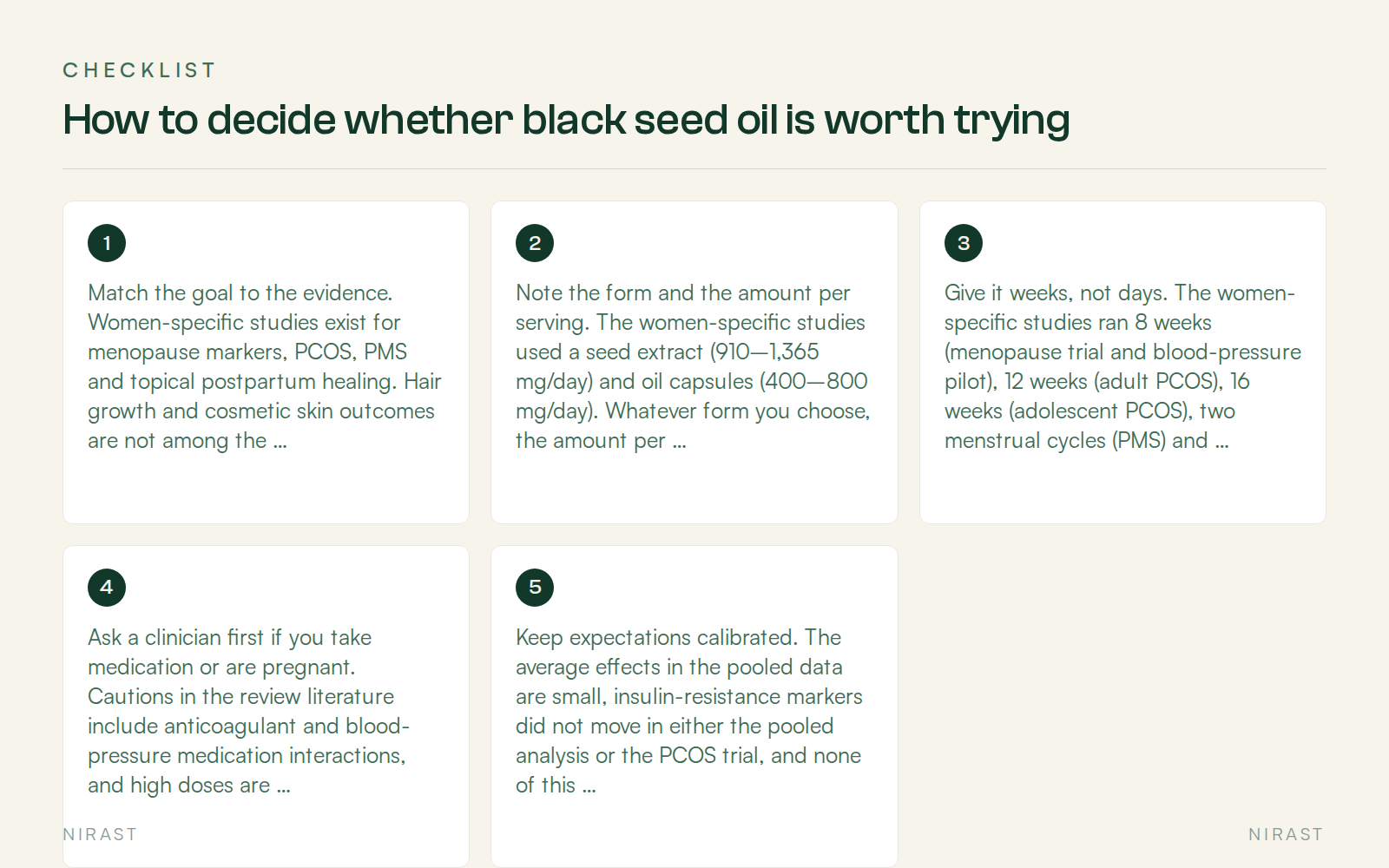
How to decide whether black seed oil is worth trying
- Match the goal to the evidence. Women-specific studies exist for menopause markers, PCOS, PMS and topical postpartum healing. Hair growth and cosmetic skin outcomes are not among the endpoints those studies measured — so any page promising them is running ahead of the research.
- Note the form and the amount per serving. The women-specific studies used a seed extract (910–1,365 mg/day) and oil capsules (400–800 mg/day). Whatever form you choose, the amount per serving on the label is the number you can actually check — thymoquinone content varies widely between commercial products (0.07%–1.88% wt/wt in one market survey), driven mostly by seed origin and extraction method (PMID 38542995). Reviewers of these studies also note that the daily thymoquinone dose often goes unreported, which makes dose-response comparisons impossible (PMID 42729546).
- Give it weeks, not days. The women-specific studies ran 8 weeks (menopause trial and blood-pressure pilot), 12 weeks (adult PCOS), 16 weeks (adolescent PCOS), two menstrual cycles (PMS) and 7 days of topical use (postpartum healing).
- Ask a clinician first if you take medication or are pregnant. Cautions in the review literature include anticoagulant and blood-pressure medication interactions, and high doses are typically not recommended in pregnancy because they may induce uterine contractions (PMID 40842670).
- Keep expectations calibrated. The average effects in the pooled data are small, insulin-resistance markers did not move in either the pooled analysis or the PCOS trial, and none of this substitutes for treating a diagnosed condition.
What the evidence does not show
Benefit roundups in this category tend to skip the limits. These are the ones that matter for women:
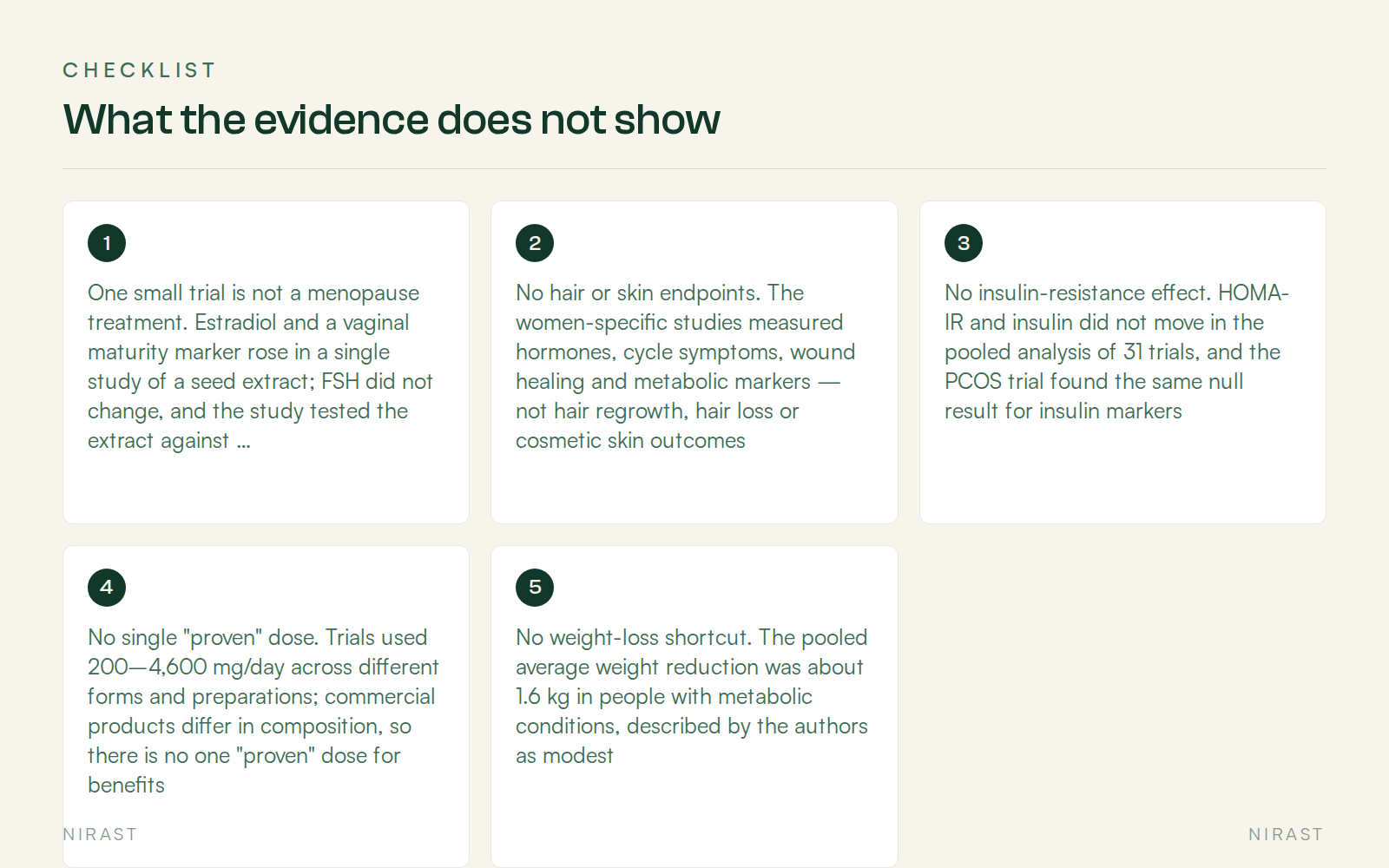
- One small trial is not a menopause treatment. Estradiol and a vaginal maturity marker rose in a single study of a seed extract; FSH did not change, and the study tested the extract against placebo, not against hormone therapy.
- No hair or skin endpoints. The women-specific studies measured hormones, cycle symptoms, wound healing and metabolic markers — not hair regrowth, hair loss or cosmetic skin outcomes.
- No insulin-resistance effect. HOMA-IR and insulin did not move in the pooled analysis of 31 trials, and the PCOS trial found the same null result for insulin markers.
- No single “proven” dose. Trials used 200–4,600 mg/day across different forms and preparations; commercial products differ in composition, so there is no one “proven” dose for benefits.
- No weight-loss shortcut. The pooled average weight reduction was about 1.6 kg in people with metabolic conditions, described by the authors as modest.
Safety: what to check before you start
The review literature describes black seed as usually safe, with side effects mainly at high intake; gastrointestinal complaints — diarrhea, bloating, nausea — are frequently reported. Allergic reactions are rare but possible in sensitive individuals, people on anticoagulant medication may develop mild blood-thinning effects, and high doses are typically not recommended in pregnancy (PMID 40842670). In the women-specific trials, two menopause-trial participants withdrew with nausea, the hypertension pilot reported no side effects, and the wound-healing trial reported no adverse effects. If you take medication, are pregnant or are breastfeeding, ask a clinician before starting.
FAQ
Is black seed oil good for women?
The women-specific evidence is real but narrow: controlled trials report higher estradiol and vaginal maturity scores after menopause, fewer PMS symptoms, better PCOS markers in adults and adolescents, and — topically — better postpartum wound healing. Effects are generally modest, and several trials are small or call for confirmation.
Does black seed oil help with menopause symptoms?
In one small randomized trial, a seed extract at 910 or 1,365 mg/day raised estradiol and the vaginal maturity index versus placebo over eight weeks; FSH did not change. A separate observational pilot in postmenopausal women with hypertension reported lower blood pressure and improved climacteric symptom scores. Neither is a substitute for hormone therapy or medical care — menopause symptoms are worth discussing with a clinician.
Can black seed oil help with PCOS?
In adult women, a 12-week placebo-controlled trial found lower IL-6 and fasting blood glucose but no change in insulin resistance, LH or testosterone. In adolescents, a 16-week trial found improvements in ovarian volume, testosterone, LH and menstrual irregularity compared with medroxyprogesterone — a drug, not a placebo. The researchers in both cases call for further confirmation, and PCOS management belongs with a clinician.
Does black seed oil help with PMS?
A small double-blind, placebo-controlled trial in 40 women found two months of black seed capsules reduced PMS symptom scores and raised estradiol versus placebo — results the authors themselves call “beneficial yet exploratory”. It is a signal worth knowing about, not a settled treatment.
Is black seed oil safe to take every day?
Reviews describe it as usually safe, with gastrointestinal complaints — diarrhea, bloating, nausea — frequently reported, mainly with excess intake. Cautions include anticoagulant and blood-pressure medication interactions and high-dose use in pregnancy. If you take medication, are pregnant or are breastfeeding, ask a clinician first.
Does black seed oil help with hair growth?
The women-specific trials described on this page did not measure hair growth or hair loss — they measured hormones, cycle symptoms, wound healing and metabolic markers. If hair is your goal, this evidence base does not cover it.
About Nirast Ethiopian Black Seed Oil
If a daily softgel is the form that fits your routine, our product is built for exactly that. Nirast Ethiopian Black Seed Oil is a softgel supplement stating 1,000 mg of black seed oil per serving, cold-pressed from Nigella sativa. The directions are simple — take 2 softgels daily with water, preferably with food — and the softgels are described as taste-free, gentle and easy to take, so there is no oil to measure and no aftertaste to work around. It is a straightforward way to take a stated amount of black seed oil every day.
The offer is a monthly subscription: 1 pouch for $29.99, delivered every month, backed by a 30-day money-back guarantee, and you can cancel by emailing support@nirast.co at least 24 hours before the next renewal. To check the label facts and subscribe, the full product page is here: Nirast Ethiopian Black Seed Oil.
These statements have not been evaluated by the Food and Drug Administration. This product is not intended to diagnose, treat, cure, or prevent any disease. Talk to your doctor or pharmacist before starting a supplement, especially if you are pregnant, nursing, take medication or have a medical condition.
Related reading
- Black Seed Oil: What It Is, What the Evidence Covers, and How to Choose a Form
- Black Seed Oil Benefits: What the Evidence Shows
- Black Seed Oil Benefits for Men: What the Evidence Shows
- Black Seed Oil Side Effects: What the Evidence Reports
Related product: Ethiopian Black Seed Oil.