
Astaxanthin vs CoQ10: What the Human Evidence Shows for Each — and How to Choose
Astaxanthin is a carotenoid from microalgae that your body doesn’t make; CoQ10 is a quinone it does. Trials cover different outcomes for each — skin, eye strain and recovery markers for astaxanthin; heart failure, statin muscle symptoms and migraine for CoQ10 — and the trials behind this comparison tested them separately, not head-to-head.
Nirast makes Nirast Extra Strength Astaxanthin. This article was written by Nirast’s editorial team and reports what the published research does and does not show.
See Nirast Extra Strength Astaxanthin → · 30-Day Money-Back Guarantee
Published by Thang Phi, founder of Nirast and publisher of the Nirast Journal.
That short version is the honest one: two different molecules, studied for different outcomes, and no head-to-head trial connects them. Below: what each evidence base covers and how to choose. For the astaxanthin ingredient profile itself, start with our astaxanthin guide.
What each one actually is: a carotenoid and a quinone
Astaxanthin is a lipid-soluble pigment from the xanthophyll carotenoid family. The green microalga Haematococcus pluvialis accumulates it as a protective response to environmental stressors such as intense light and nutrient starvation, and humans cannot synthesize it endogenously — it is obtained through the diet (PMID 37888449; PMID 42193197).
CoQ10 is an endogenous, lipid-soluble quinone found in biological membranes, where it acts as a cofactor of mitochondrial respiratory complexes supporting cellular bioenergetics; its reduced form, ubiquinol, also acts as an antioxidant. It appears as ubiquinol (reduced) or ubiquinone (oxidized) and plays a key role in electron transport in mitochondrial energy production (PMID 34439573; PMID 32349341).
So: CoQ10 is a compound your body makes and uses in energy metabolism; astaxanthin is a pigment you take in. Both are lipid-soluble — astaxanthin follows dietary-lipid absorption pathways (PMID 42198217).
What human trials show for astaxanthin
Skin. A 2021 systematic review and meta-analysis of randomized trials found oral astaxanthin significantly improved skin moisture (SMD 0.53) and elasticity (SMD 0.77) versus placebo, but not wrinkle depth (SMD −0.26). Its trials used 4–12 mg/day for 4–16 weeks in 16–65 middle-aged participants. The review cautions that small samples, imperfect design and potential conflicts of interest limited reliability, and calls for more robust trials (PMID 34578794).
Eyes. In a 2025 randomized, double-blind, placebo-controlled trial, children with digital eye strain took a daily 4 mg astaxanthin soft capsule for 84 days: CVS-Q scores improved significantly versus placebo, with no significant intergroup differences in visual acuity or safety variables (PMID 40014233). In adults, a 6-week randomized trial in 60 participants aged 20–64 found no significant difference across the full sample; the positive visual-acuity signal after screen work appeared only among those aged 40 and older (PMID 36777084).
Exercise recovery. A 2026 systematic review and meta-analysis pooled 24 randomized trials in physically active people (4–28 mg/day, 4 days to 16 weeks): creatine kinase, a muscle-damage marker, fell significantly versus control (SMD −0.45) and was rated the most consistent recovery signal at moderate certainty, while pooled performance outcomes remained inconclusive — astaxanthin may be more relevant to recovery than performance (PMID 42197030). A four-week trial found 12 mg/day and 36 mg/day similarly attenuated the post-exercise rise in creatine kinase, with no benefit at the higher dose (PMID 42051615).
Markers and metabolic outcomes. A 2026 systematic review of 15 human studies found astaxanthin consistently reduced pro-inflammatory cytokines (IL-6, TNF-α, TGF-β1) and oxidative-stress indices while increasing antioxidant capacity — with considerable heterogeneity and long-term data still lacking (PMID 41596351). In prediabetes and type 2 diabetes, a meta-analysis found no clear dose–response: higher doses did not consistently produce greater metabolic improvements, suggesting a threshold or saturation effect (PMID 42100673).
Joints and heart failure. A knee-osteoarthritis review reports a randomized, double-blind, placebo-controlled trial in which 12 mg/day for 8 weeks produced significantly better pain, function and WOMAC improvements than placebo, while noting existing RCTs are limited by small samples and short follow-up (PMID 42589430). In an 8-week randomized trial in 80 patients with heart failure, 20 mg/day astaxanthin significantly reduced TNF-α and MCP-1 versus placebo, with no significant effect on hs-CRP (PMID 42303733).
Forms and safety. Natural astaxanthin — including the esterified forms from Haematococcus pluvialis — can produce human plasma AUC two to three times greater than synthetic forms, which lack equivalent long-term safety data and are typically not authorized for supplements in significant jurisdictions (PMID 42193197). The compiled safety record describes no clinically important changes in blood or blood-pressure markers at 6 or 20 mg daily in healthy adults, with clinical safety described up to 100 mg daily (PMID 42193197); a 2023 review reports no clinical safety concerns up to 24 mg/day for 12 weeks or 12 mg/day for more than 6 months in healthy subjects (PMID 37888449). Doses of 4–100 mg/day are recorded as well tolerated up to 12 weeks; above roughly 12–18 mg/day, red stool, more frequent bowel movements or stomach pain have been reported (PMID 42382501). EFSA applies an acceptable daily intake of 0.2 mg/kg body weight per day for astaxanthin from H. pluvialis (PMID 41346945).
What human trials show for CoQ10
CoQ10’s evidence sits in clinical populations — heart failure, statin muscle symptoms, migraine, fertility — plus formulation and safety studies.
Heart failure. Q-SYMBIO randomly assigned 420 patients with moderate to severe heart failure to CoQ10 100 mg three times daily or placebo for 2 years, in addition to standard therapy. The primary long-term endpoint (major adverse cardiovascular events) was reached by 15% of the CoQ10 group versus 26% of placebo (HR 0.50; 95% CI 0.32–0.80), with significantly lower cardiovascular and all-cause mortality and HF hospital stays (PMID 25282031). A review cautions the effect was unexpected and should be interpreted with caution given the small number of events and sample size (PMID 32349341). A 2025 randomized trial in 120 heart-failure patients found 2 × 60 mg/day improved global longitudinal strain, NT-proBNP and 6-minute walk distance at 6 months, while LVEF improvement did not reach significance (PMID 40507436).
Statin muscle symptoms. A 2025 systematic review and meta-analysis found an overall significant reduction in muscle pain intensity with CoQ10 in patients with existing statin-induced myopathy — while flagging high heterogeneity (I² = 93.3%) and noting previous meta-analyses reported contradicting results (PMID 41158831).
Migraine. Pooled analyses have reported that coenzyme Q10 reduced migraine frequency and severity, including a meta-analysis in 120 pediatric patients and 226 adults showing fewer migraine days and shorter episodes (PMID 42220661). In a 2026 network meta-analysis, however, no comparison between active interventions achieved statistical significance (PMID 42707444).
Fertility and metabolic markers. In a 2025 meta-analysis of 9 RCTs (781 participants) in idiopathic male infertility, CoQ10 increased total sperm motility (MD 4.95%) and clinical pregnancy rates (OR 6.02), though the pregnancy data are limited by the low number of studies (PMID 40878114). In prediabetes and type 2 diabetes, a meta-analysis of 20 RCTs found CoQ10 significantly reduced triglycerides, fasting blood sugar, HbA1c, HOMA-IR and CRP and increased HDL, with no significant effect on blood pressure or LDL (PMID 42642774).
Forms, absorption and safety. CoQ10 supplements come as ubiquinone (oxidized) or ubiquinol (reduced); in a 2026 randomized trial ubiquinol raised plasma CoQ10 more than ubiquinone (+2.29 vs +1.46), though reviews of ubiquinol’s claimed superiority note mixed clinical results (PMID 42807157), and a small crossover study found a ubiquinol formulation reached about 2.2× the peak concentration and 2.0× the exposure of ubiquinone (PMID 41789786). CoQ10 is generally perceived as safe, but real-world safety evidence is limited: in a EudraVigilance analysis, the most frequent report groups were general disorders, nervous-system disorders, investigations and gastrointestinal disorders (PMID 42280358). A 2025 review concludes CoQ10 — particularly ubiquinol — improves myocardial bioenergetics and potentially heart-failure outcomes, while statin-muscle data remain inconclusive (PMID 41669146). CoQ10 also has emerging skin data: a 12-week liquid supplement containing CoQ at 50 or 150 mg/day was associated with reduced periorbital wrinkles in a cohort of 33 women (PMID 34439573).
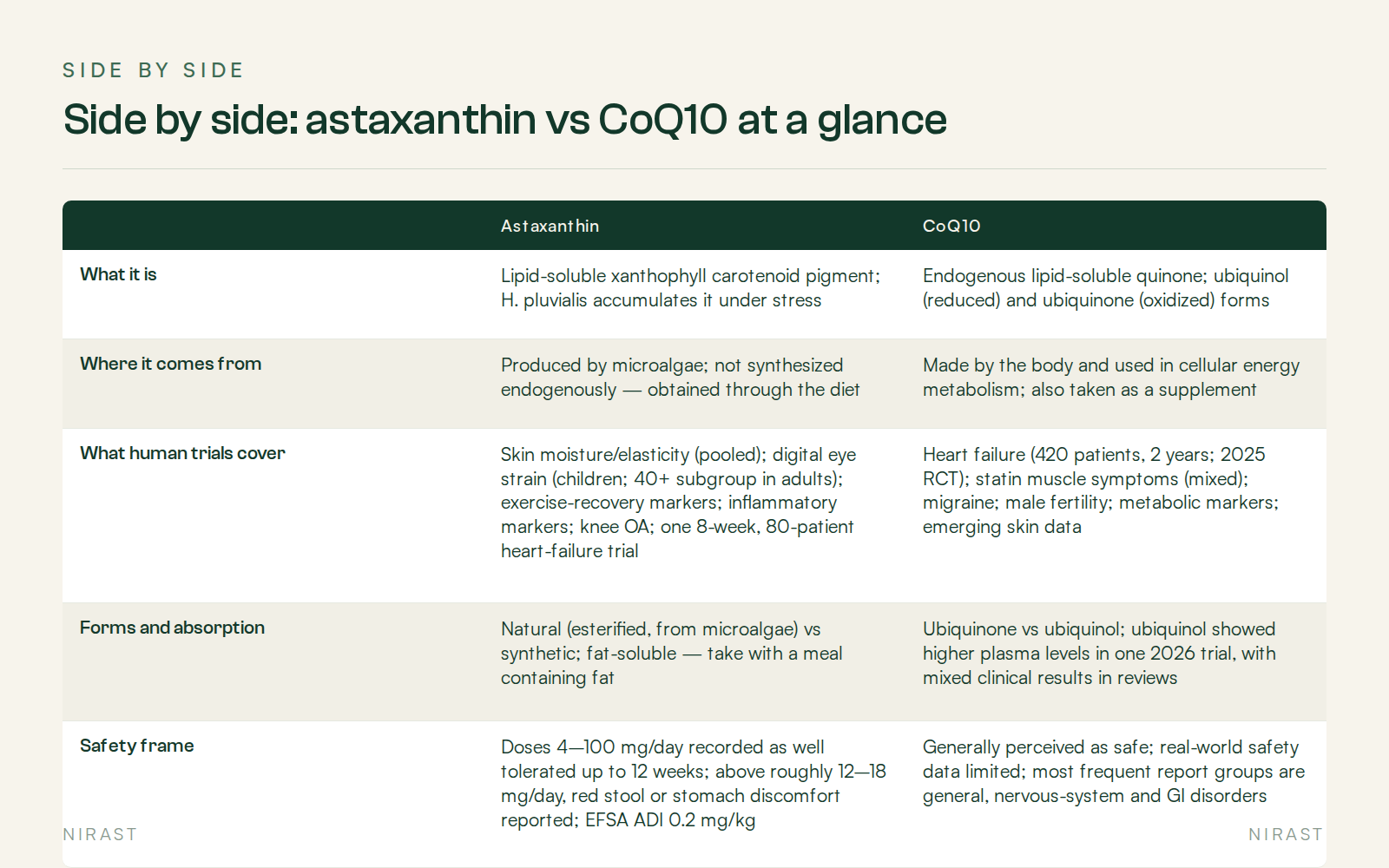
Side by side: astaxanthin vs CoQ10 at a glance
| Astaxanthin | CoQ10 | |
|---|---|---|
| What it is | Lipid-soluble xanthophyll carotenoid pigment; H. pluvialis accumulates it under stress | Endogenous lipid-soluble quinone; ubiquinol (reduced) and ubiquinone (oxidized) forms |
| Where it comes from | Produced by microalgae; not synthesized endogenously — obtained through the diet | Made by the body and used in cellular energy metabolism; also taken as a supplement |
| What human trials cover | Skin moisture/elasticity (pooled); digital eye strain (children; 40+ subgroup in adults); exercise-recovery markers; inflammatory markers; knee OA; one 8-week, 80-patient heart-failure trial | Heart failure (420 patients, 2 years; 2025 RCT); statin muscle symptoms (mixed); migraine; male fertility; metabolic markers; emerging skin data |
| Forms and absorption | Natural (esterified, from microalgae) vs synthetic; fat-soluble — take with a meal containing fat | Ubiquinone vs ubiquinol; ubiquinol showed higher plasma levels in one 2026 trial, with mixed clinical results in reviews |
| Safety frame | Doses 4–100 mg/day recorded as well tolerated up to 12 weeks; above roughly 12–18 mg/day, red stool or stomach discomfort reported; EFSA ADI 0.2 mg/kg | Generally perceived as safe; real-world safety data limited; most frequent report groups are general, nervous-system and GI disorders |
Has any trial compared astaxanthin with CoQ10 head-to-head?
No. Across the human trials behind this page, each supplement was tested against placebo or standard care; none compared astaxanthin with CoQ10 directly (PMID 25282031; PMID 34578794). The closest designs are combination formulas: a 2016 meta-analysis of 14 randomized trials of a formulation containing CoQ10, red yeast rice, berberine, policosanol, astaxanthin and folic acid suggested lipid and glucose benefits, and a 2021 meta-analysis of 12 trials supported similar combinations (PMID 36297067). Those results cannot attribute effects to either ingredient — a five- or six-ingredient bundle is not a head-to-head test. So “which is better?” has no ranked answer: no study has run them against each other.
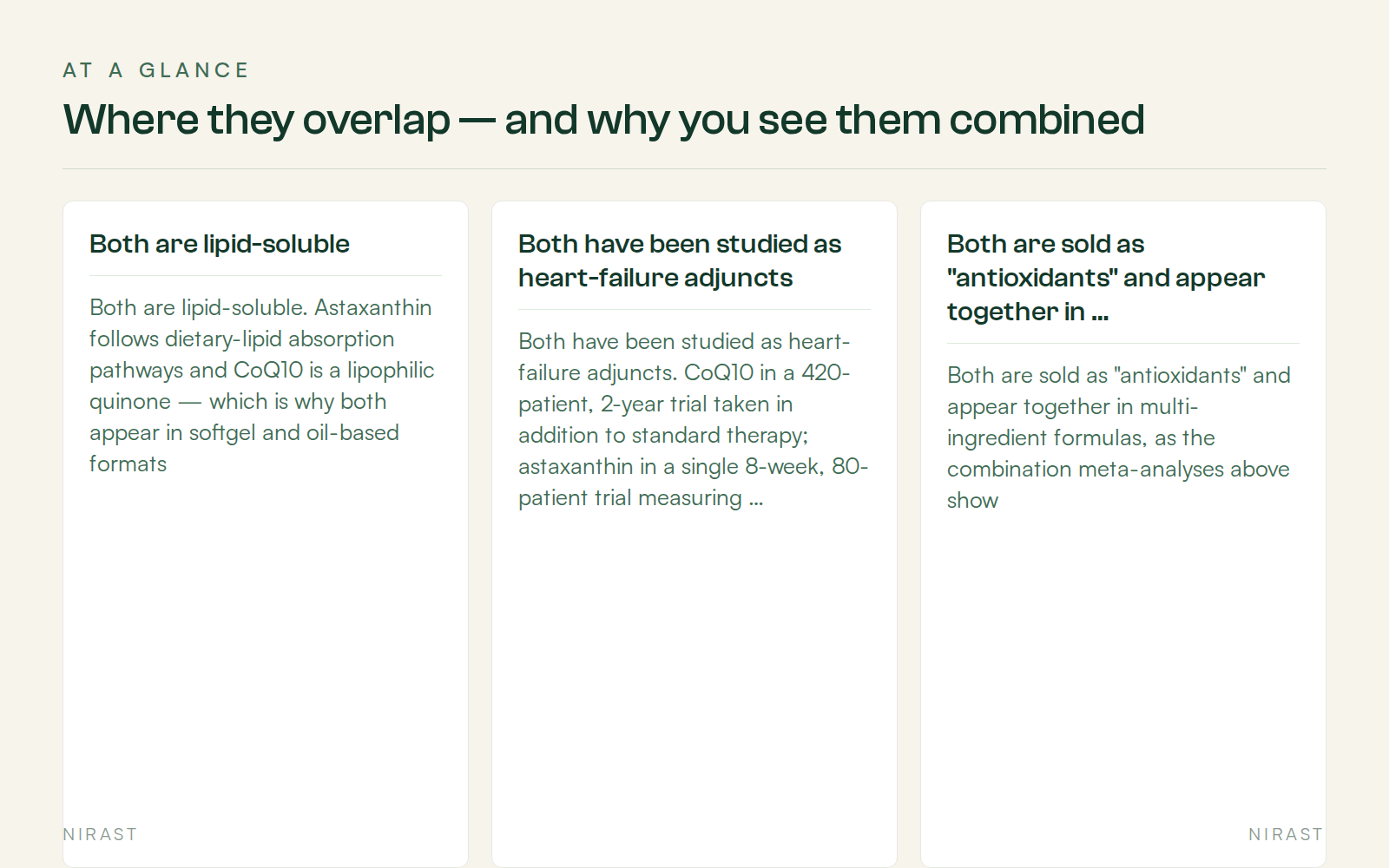
Where they overlap — and why you see them combined
- Both are lipid-soluble. Astaxanthin follows dietary-lipid absorption pathways and CoQ10 is a lipophilic quinone — which is why both appear in softgel and oil-based formats.
- Both have been studied as heart-failure adjuncts. CoQ10 in a 420-patient, 2-year trial taken in addition to standard therapy; astaxanthin in a single 8-week, 80-patient trial measuring inflammatory markers.
- Both are sold as “antioxidants” and appear together in multi-ingredient formulas, as the combination meta-analyses above show.
One overlap is mostly marketing: “antioxidant strength.” The multiplier figures that circulate come from laboratory chemistry — astaxanthin is recorded as approximately 550 times more effective than alpha-tocopherol at neutralizing singlet oxygen, a chemical assay measurement (PMID 42193197). No trial behind this page measured “strength” as an outcome; they measured skin moisture, eye-strain scores, creatine kinase, inflammatory markers, sperm motility and migraine days.
How to choose between astaxanthin and CoQ10
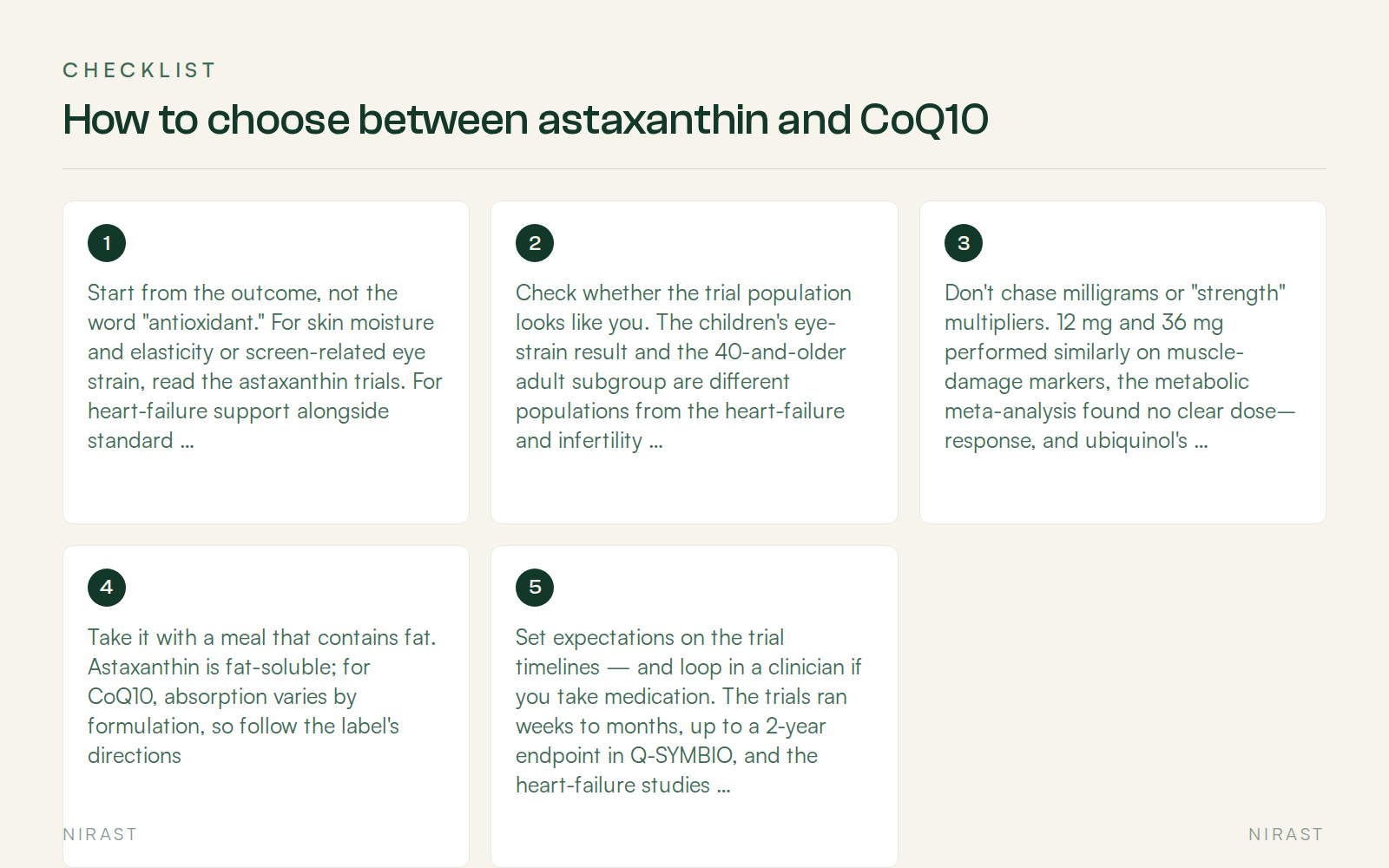
- Start from the outcome, not the word “antioxidant.” For skin moisture and elasticity or screen-related eye strain, read the astaxanthin trials. For heart-failure support alongside standard therapy, statin muscle symptoms or migraine, CoQ10 has the clinical-population trials.
- Check whether the trial population looks like you. The children’s eye-strain result and the 40-and-older adult subgroup are different populations from the heart-failure and infertility trials — a result in one group is not a promise for another.
- Don’t chase milligrams or “strength” multipliers. 12 mg and 36 mg performed similarly on muscle-damage markers, the metabolic meta-analysis found no clear dose–response, and ubiquinol’s claimed advantage over ubiquinone has mixed clinical support.
- Take it with a meal that contains fat. Astaxanthin is fat-soluble; for CoQ10, absorption varies by formulation, so follow the label’s directions.
- Set expectations on the trial timelines — and loop in a clinician if you take medication. The trials ran weeks to months, up to a 2-year endpoint in Q-SYMBIO, and the heart-failure studies added the supplements to standard therapy, not instead of it.
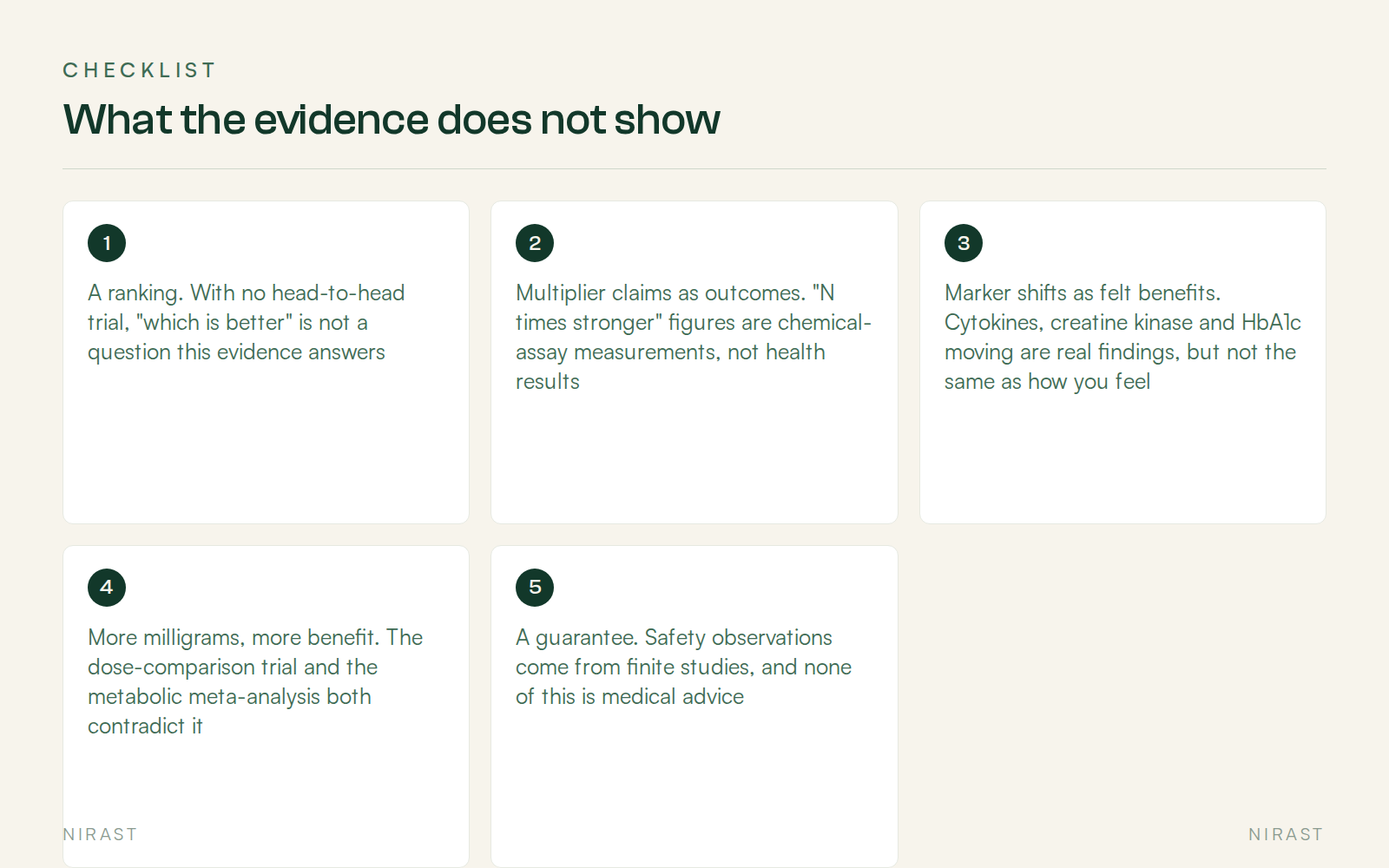
What the evidence does not show
- A ranking. With no head-to-head trial, “which is better” is not a question this evidence answers.
- Multiplier claims as outcomes. “N times stronger” figures are chemical-assay measurements, not health results.
- Marker shifts as felt benefits. Cytokines, creatine kinase and HbA1c moving are real findings, but not the same as how you feel.
- More milligrams, more benefit. The dose-comparison trial and the metabolic meta-analysis both contradict it.
- A guarantee. Safety observations come from finite studies, and none of this is medical advice.
FAQ
Which is better, CoQ10 or astaxanthin?
The evidence does not rank them: no human trial behind this comparison tested the two against each other. Each has its own evidence base with different outcomes — skin, eye strain and recovery markers for astaxanthin; heart failure, statin muscle symptoms, migraine and fertility for CoQ10. Choose by outcome and by whether the trial populations resemble yours.
Can you take astaxanthin and CoQ10 together?
The trials here studied each supplement on its own, so they do not answer this directly. Formulated supplements combine CoQ10, astaxanthin and other ingredients — the 2016 and 2021 meta-analyses examined such bundles for lipid and glucose profiles — but those designs cannot attribute effects to the pair. If you take medication or manage a health condition, that question belongs with a clinician.
Is astaxanthin stronger than CoQ10?
“Stronger” is a laboratory measurement, not a human outcome. The figure often quoted — astaxanthin roughly 550 times more effective than alpha-tocopherol at neutralizing singlet oxygen — comes from chemical assays (PMID 42193197), and no trial behind this page measured antioxidant strength as a result. What the trials measured were specific endpoints: skin moisture, eye-strain scores, creatine kinase, inflammatory markers, sperm motility and migraine days.
Which one should I take for heart health?
Neither replaces standard care. CoQ10 has the larger heart-failure trial: Q-SYMBIO randomized 420 patients for 2 years, with the supplement taken in addition to standard therapy (PMID 25282031). Astaxanthin’s heart-failure data come from a single 8-week trial in 80 patients measuring inflammatory markers (PMID 42303733). Both are adjunct-study findings, not treatment advice — if you have heart failure, that conversation belongs with your clinician.
Which one is better for skin and eyes?
Astaxanthin has the pooled skin results (moisture and elasticity improved; wrinkle depth did not change significantly) and the digital eye-strain trials (a positive result in children, a 40-and-older subgroup signal in adults). CoQ10’s evidence here is concentrated elsewhere — heart failure, statins, migraine, fertility — with emerging skin data from small studies. No study has compared the two for either outcome.
Do astaxanthin and CoQ10 need to be taken with food?
For astaxanthin, a fat-containing meal is the sensible default: it is fat-soluble and follows the same absorption pathways as dietary lipids (PMID 42198217). For CoQ10, absorption varies by formulation — ubiquinol showed higher plasma levels than ubiquinone in one 2026 trial (PMID 42807157) — so follow the label’s directions.
Choosing astaxanthin: Nirast Extra Strength Astaxanthin
If the astaxanthin side of this comparison matches what you’re after, here is the product this page supports. Nirast Extra Strength Astaxanthin is a softgel supplement, and the product page states that each softgel delivers 12 mg of pure natural astaxanthin. The label artwork reads “120 Softgels | Dietary Supplement”, and the directions are to take 2 softgels daily with water, preferably with food — which fits the fat-solubility point above. The softgels are described as clean, tasteless and easy to swallow. The offer is a monthly subscription with tiers displayed at $29.99, $59.99 and $89.99; every delivered order is covered by a 30-Day Money-Back Guarantee.
Still comparing forms? Our astaxanthin supplement guide covers label and form checks, and the astaxanthin benefits breakdown goes deeper on the trial-by-trial evidence.
See Nirast Extra Strength Astaxanthin here.
These statements have not been evaluated by the Food and Drug Administration. This product is not intended to diagnose, treat, cure, or prevent any disease. Talk to your doctor or pharmacist before starting a supplement, especially if you are pregnant, nursing, take medication or have a medical condition.
Related reading
- Astaxanthin: What It Is, What the Evidence Covers, and How to Choose a Form
- Astaxanthin Supplement: What It Is and How to Choose
- Astaxanthin Dosage per Day: What the Human Trials Used
- Astaxanthin for Eyes: What Human Trials Measured for Digital Eye Strain
Related product: Nirast Extra Strength Astaxanthin.